
 Makes 1 quart
 Easy
Easy Garlic-Dill Sauerkraut
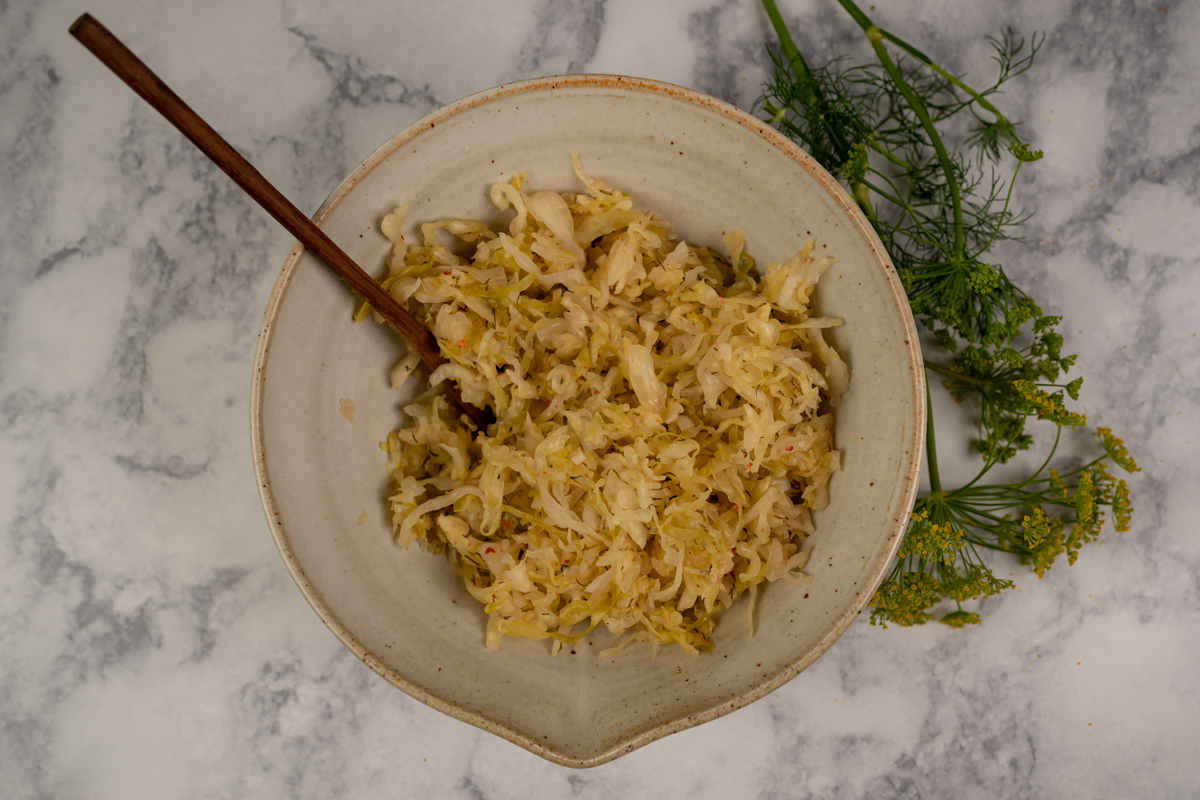
We are big fans of sauerkraut and keep a good amount of a plain version on hand at all times. The juice of the kraut is a key ingredient in our homemade ketchup, mustard, and relishes because it adds beneficial bacteria to the condiments that allows them to last longer in storage–and it also lends a sophisticated tang and depth of flavor that we have come to really appreciate. This garlic-dill sauerkraut is especially flavorful. It is really lovely tucked into a grilled cheese sandwich, scattered on top of a salad, or served alongside a hearty stew. That said, if you want to make plain kraut, you can follow this recipe and simply omit the garlic, dill, and pepper.
If you are new to recipes involving fermentation, then there are a couple of things you’ll want to be aware of. The fermentation process varies from batch to batch, so you might see different activity once it begins. If for example, you find that a thin layer of white scum appears on the surface of the ferment, do not be alarmed; this is unharmful kahm yeast that can be skimmed away as it develops. However, if mold appears, remove the cabbage leaves and discard the top 1-inch layer of kraut. You can then fully submerge the kraut again under the brine before replacing the weights and airlock lid.
Ingredients
Instructions
- Wash and dry the cabbage. Remove the outer 2 to 3 leaves and set aside. Using a sharp knife, quarter the cabbage and remove the core. Using a box grater, thinly shred the cabbage quarters (alternatively, use your knife to thinly slice it).
- Place the cabbage in a large bowl. Sprinkle the salt over the top and massage the cabbage with a clean hand until it begins to release liquid, 5 to 10 minutes. The mixture will feel limp at first but will develop the consistency of lightly cooked cabbage. Add the garlic, dill, and Aleppo pepper, and toss to combine.
- Pack the cabbage mixture into a clean 1-quart jar, pushing it down with your fists as you go to remove any trapped air. Place the reserved cabbage leaves on top of the cabbage mixture and pour the remaining liquid from the bowl into the jar. Press to submerge the cabbage mixture and leaves under the brine, leaving no more than 2 to 3 inches of airspace between the top of the brine and the rim of the jar. Place fermentation weights on top of the cabbage leaves to keep everything submerged in the brine. Fit an airlock lid in place (See Note).
- Place the jar in a cool dark place that is about 65-75°F for 10 to 14 days. Check on the kraut every few days; you want to see small bubbles forming in the mixture, which indicates that fermentation has begun.
- After 10 days, start checking the flavor and smell of the kraut. When it has a noticeable tang and smells and tastes to your liking, replace the airlock with a non-reactive lid and move to the refrigerator. The kraut will keep in the refrigerator for up to 1 year.
Notes
If you are new to fermenting, watch Molly’s video where she walks you through the process and explains what an airlock lid is.

https://alf.goat-digital.com/recipe/garlic-dill-sauerkraut/
Copyright © 2026 Apricot Lane Farms. All rights reserved.